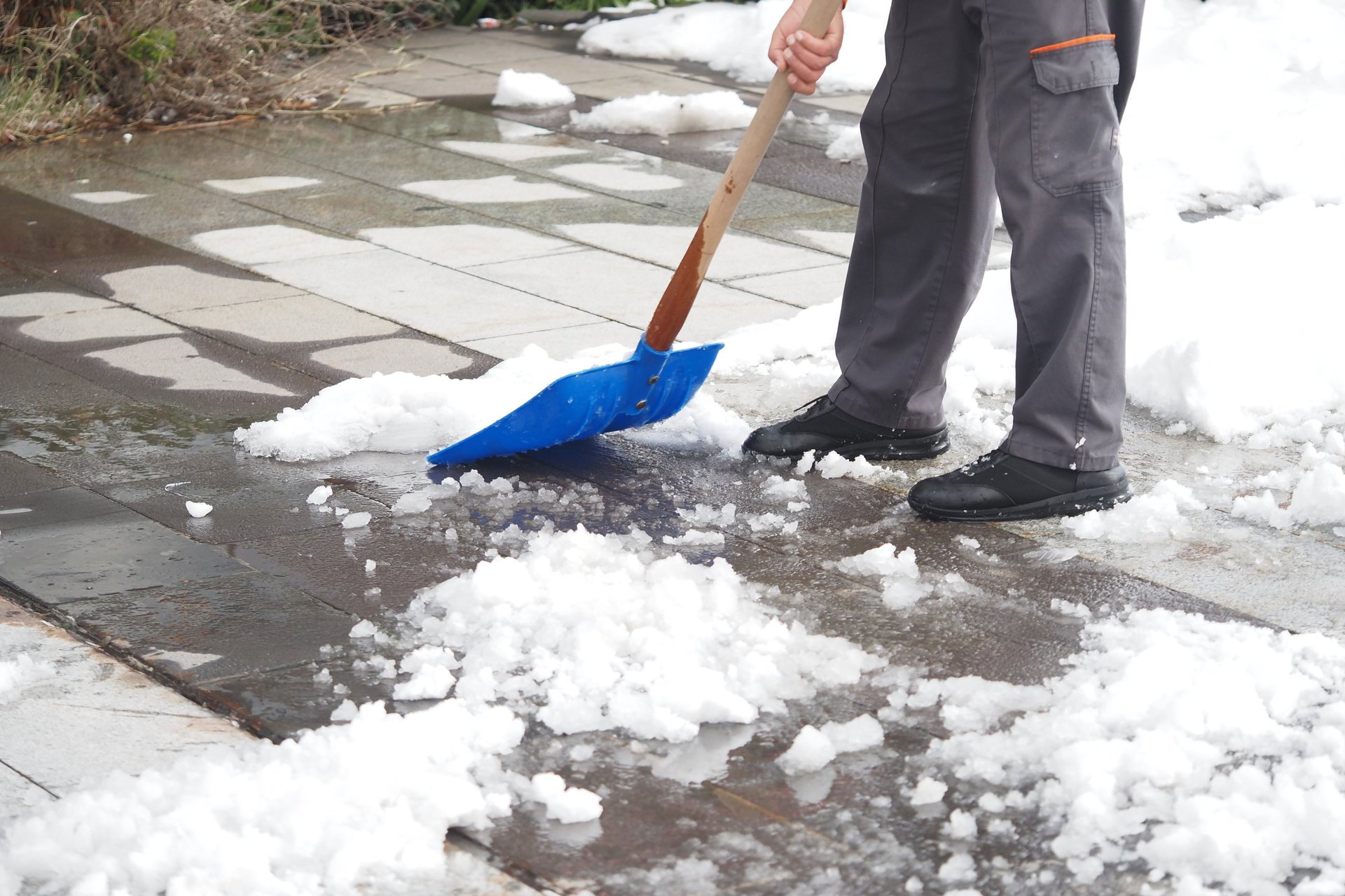
Person clears snow from a walkway on a chilly winter day
Risk & Liability

Snow Removal & Winter Liability for Ottawa Landlords

A slip on an icy walkway is the single most common winter injury claim against Ottawa landlords — and almost every defence comes down to what you can prove you did, and when. Here is the contract, insurance and documentation position you need in place before the first freeze.

10 min read Ottawa Prime Properties

The short version

  • Ontario's Occupiers' Liability Act imposes a duty of reasonable care on whoever controls the property — usually the landlord.
  • Assigning snow clearing to a tenant does not automatically transfer liability to them.
  • In Ottawa, winter maintenance is not measured by whether it snowed — it's measured by freeze-thaw cycles and ice.
  • Your best protection is a written contract with a trigger threshold, verified insurance, and a dated service log.

Who is actually liable when someone falls?

Under Ontario's Occupiers' Liability Act, an occupier owes a duty to take reasonable care that people on the property are safe. For a residential rental, the occupier is normally the landlord for the common areas — driveways, walkways, shared entrances, parking areas, and exterior stairs. A tenant is an occupier of their own unit, but the landlord remains responsible for the parts they control.

The critical point most landlords get wrong: putting "tenant responsible for snow removal" in a lease does not remove the landlord's exposure. Courts look at who actually exercised control and whether the arrangement was reasonable and monitored. If a tenant agreed to shovel and then didn't, and someone falls on an icy shared walkway, the landlord will usually still be named in the claim. The lease clause becomes one piece of evidence, not a shield.

That is why the practical recommendation for any multi-unit or shared-entrance property is straightforward: the landlord arranges and pays for snow clearing, and treats it as an operating cost rather than a negotiable extra.

The standard that actually applies

It is not "the walk was clear when I checked." It is whether a reasonable system was in place, whether it responded to conditions as they changed, and whether you can prove it. Sanding and salting after a freeze-thaw cycle matters more than shovelling during a snowfall.

Why Ottawa is a harder liability market than most

Ottawa's winter pattern creates the exact conditions that produce claims: frequent freeze-thaw cycles, rain followed by rapid temperature drops, and long stretches where the surface is neither snow nor dry pavement. A walkway cleared at 7 a.m. can be glare ice by 4 p.m. after a mid-day melt and refreeze.

This is the reason "cleared after every snowfall" contracts fail in practice. Snowfall-triggered service does not address black ice, packed snow that thaws and refreezes, or downspout discharge that runs across a walkway and freezes overnight. The service standard needs to include ice control and inspection, not just snow pushing.

What a defensible snow contract contains

A one-page invoice is not a contract. The following terms are what make a snow removal agreement useful if a claim arrives 18 months later.

Essential terms in an Ottawa residential snow removal contract
Term What to specify
Scope map Exact areas: driveway, front walk, side path, steps, shared entrance, mailbox approach, garbage area. Attach a diagram.
Trigger threshold Snow accumulation depth that triggers service, plus a separate ice/freezing-rain trigger that does not depend on snow depth.
Service window How many hours after the trigger the site must be cleared, and the maximum interval between visits.
Ice control Material used, application frequency, and who supplies and stores it.
Documentation Contractor must provide dated service records, ideally with photos, and make them available on request.
Insurance Minimum commercial general liability limit, the property owner named as additional insured, certificate provided before the season starts.
Equipment and damage Who pays for damaged interlock, lawns, fences, or siding, and the contractor's obligation to report damage.
Notice and termination Season dates, renewal terms, and what happens if service fails — your right to replace the contractor mid-season.

Two clauses deserve particular attention. First, the ice trigger — if your contract only responds to snowfall, it does not cover the conditions that cause most Ottawa claims. Second, the records clause — if the contractor cannot produce a service log, you have no defence, no matter how well the work was actually done.
The documentation that wins and loses claims

Winter injury claims typically arrive months or years after the fall, after the ice is long gone. By then, memory is useless and the only thing that matters is the paper trail. Four records do most of the work.

1

The signed contract with the scope map

Proves what was promised and by whom. Keep the signed version, not just the quote, and keep it for at least two years after the season ends. If the walkway that failed isn't on the map, you have a genuine defence. If it is, you need the service records.

2

Dated service logs, per visit

Date, time, work performed, material applied, and the name of the operator. A log that shows service on the morning of the incident, including salt or sand, is close to an absolute defence. A single season-long invoice is close to none.

3

Seasonal condition photos

Photograph the walkways at the start of the season and after major events. This documents the baseline condition and catches pre-existing defects — heaved pavers, cracked concrete, a missing handrail — that would otherwise be blamed on winter.

4

Insurance certificates, verified annually

Get the certificate directly from the contractor's broker, not from the contractor. Confirm the limit, the expiry date, and that your ownership entity is listed. A contractor with lapsed coverage is effectively uninsured, and the exposure comes back to you.

Don't forget the city sidewalk

If your property fronts a city sidewalk, Ottawa's bylaw requires the owner or occupier to clear snow and ice from it — typically within 12 hours after snowfall ends. This is the obligation landlords most often overlook, because it isn't on their own property and nobody invoices for it.

Two things make it worth taking seriously. Enforcement is complaint-driven, so the first sign is usually a neighbour or a bylaw officer. And every enforcement record becomes evidence in a civil claim — a documented failure to clear is far worse than a claim with no bylaw history at all. If your property has sidewalk frontage, put it explicitly in the snow contract's scope map and price it in.

If a tenant takes on snow clearing

For a single-family rental where the tenant occupies the whole property including the driveway, an arrangement where the tenant clears snow can be reasonable — and is common in Ottawa leases. It still needs to be done properly.

For a multi-unit building, shared driveway, or any property with common areas, don't delegate it. The landlord controls those spaces and will be treated as the occupier of them.

The pre-winter liability checklist

  • Snow contract signed, with an ice trigger and a service window
  • Scope map attached; all walkways, steps, and parking areas named
  • Contractor's insurance certificate received and current
  • Service log format agreed in writing before the first snowfall
  • Handrails, steps, and lighting inspected and repaired
  • Downspouts discharging away from walkways, not across them
  • Ice melt supplied and stored on site
  • Written winter notice sent to every tenant
  • Baseline photos taken of every walking surface

Where this connects to the rest of your winter obligations

Slip-and-fall liability is one half of the winter picture. The other half is habitability — the obligation to maintain heat at a minimum of 20°C in living areas, to prevent pipe freezing, and to keep the property weathertight. A furnace failure and an icy walkway are the same category of risk: foreseeable, preventable, and documented or not.

Our winterizing guide covers the heating and pipe side in detail, and the October winter-prep deadline sets out the sequence and timing. For the insurance angle — including the riders most Ottawa landlords are missing — see our Ontario landlord insurance guide.

This article is general information for Ontario landlords and is not legal advice. Liability determinations depend on the specific facts of a claim. Confirm your obligations with your insurer, a paralegal, or legal counsel.

Winter liability questions, answered

What Ottawa landlords ask us most often about snow and ice claims.

Want your winter risk handled before the first freeze?

We arrange vetted snow and ice contractors, verify their insurance, keep dated service records for every property we manage, and send the written winter notice to every tenant. Free rental analysis, no obligation.

Response within 24 hours · Completely confidential

winter house and driveway after snow storm
Risk & Maintenance

Snow Removal & Winter Liability for Ottawa Landlords

A slip on an icy walkway is the single most common winter injury claim filed against Ottawa residential landlords — and in most cases the payout turns on paperwork, not on how much snow fell. Here is what your legal duty actually is, what a snow contract must contain, and how to build the evidence file that defends you.

8 min read Ottawa landlords

The short version

  • Under Ontario's Occupiers' Liability Act, you owe a duty of reasonable care to anyone entering the property — tenants, guests, delivery drivers, and canvassers.
  • Hiring a contractor does not transfer your liability. You remain an occupier; the contractor is an additional layer of protection.
  • Ottawa's bylaw sets a 12-hour window after snowfall ends for clearing sidewalks on properties that front a city sidewalk.
  • Claims are won or lost on documentation: dated service logs, trigger depth, photographs, and proof of the contractor's insurance.

What your legal duty actually is

Ontario does not require perfection. The standard is reasonable care in the circumstances — which, in practice, means a landlord is expected to have a system for winter maintenance and to follow it. A court or insurer asks three questions:

A landlord with a signed contract, a service log and dated photographs is in a completely different position from one who says "the tenant was supposed to shovel." The second answer is the most expensive sentence in Ontario residential property management.

The "tenant clears it" trap

Putting snow removal on the tenant in the lease feels like a clean solution. It is not. You remain an occupier of the common areas, and a lease clause does not extinguish that duty toward the tenant's guests, delivery workers, or emergency responders. If you use a tenant-clears arrangement, pair it with a written standard, a supplied shovel and salt, and periodic landlord inspection.

Ottawa's 12-hour sidewalk rule

Ottawa's Use and Care of Roads By-law requires the owner or occupier of property that fronts a city sidewalk to clear it of snow and ice within 12 hours after the snow stops falling. This applies to residential rentals, not just commercial frontage, and it is enforced by bylaw officers on complaint.

Two practical consequences follow. First, a contractor whose contract says "within 24 hours of a 5 cm accumulation" may satisfy the contract and still leave you in breach of the bylaw — those clocks are not the same clock. Second, bylaw enforcement creates a paper trail that a personal injury plaintiff can later obtain. A single prior bylaw warning becomes evidence of a known, unaddressed hazard.

What a snow contract must contain

Most residential snow contracts are a one-page invoice with a price and a season. That is not enough to protect you. Insist on these terms in writing before the first snowfall.

Essential terms in an Ottawa residential snow removal contract
Term What to specify Why it matters
Trigger depth Clear at 2–3 cm, not 5 cm or "major accumulation" Compaction below the trigger is what becomes ice
Response time On site within 6 hours of snowfall ending Keeps you inside Ottawa's 12-hour sidewalk window
Included surfaces Driveway, front walk, side walk, rear path, steps, porch, shared stairwells The path nobody wrote down is the one someone slips on
De-icing Salt or grit applied on every visit and after freezing rain Clearing snow without treating ice is half a job
Service records Dated log with timestamp, weather, work done, photos — sent to you This is your defence file; you cannot build it later
Insurance $2M+ CGL, landlord named as additional insured, certificate provided Without it, claims route back to your policy
Non-performance Backup arrangement and credit if the contractor misses a service Contractors do miss storms; you need a second mover

Also confirm that the contract covers freezing rain and ice events, not just snowfall. In Ottawa a January thaw followed by a refreeze creates the most dangerous surface of the year, and many contracts are silent on it because there is no accumulation to measure.

The evidence file that defends a claim

If a claim arrives in February, you will be asked to reconstruct a day in December. Do not try to do it from memory. Maintain these four records continuously:

  1. 1

    Contractor service logs — dated, timed, with surfaces cleared and product applied. Request them monthly and store them, do not rely on the contractor to keep them for you.

  2. 2

    Property photographs — after each major event, showing cleared paths. A timestamped photo of a clear walkway on the morning of an evening slip is decisive.

  3. 3

    Tenant maintenance reports — any message reporting ice, a downspout discharging onto a walk, or a failed exterior light, with your response and date resolved.

  4. 4

    Insurance certificates — current CGL certificate from the snow contractor, renewed each season and filed with the contract.

Where winter claims actually originate

In our portfolio the recurring hazards are rarely the driveway. They are downspouts discharging onto a walkway and refreezing overnight, north-facing steps that never see sun, porch steps with a missing handrail, and exterior lights that fail in December so the hazard cannot be seen at all. Each of these is a five-minute fix in November and a five-figure claim in February.

For the broader seasonal sequence, see our October winter prep deadline guide and the full winterizing guide. If you are coordinating this yourself, it falls under maintenance coordination, and the heating side of winter risk is covered in the November 2026 market update.

Winter liability questions, answered

The questions Ottawa landlords ask us most often heading into the snow season.

This article is general information for Ontario landlords and is not legal advice. Confirm current bylaw requirements and insurance obligations with the City of Ottawa or a qualified professional.

Who is clearing your walkways this winter?

We contract snow removal across every property we manage, keep dated service logs on file for each address, and verify contractor insurance annually — so a January claim does not become a January scramble.

Response within 24 hours · Completely confidential